A social media agency plans, scripts, produces, publishes and analyzes a brand's social content, with a team covering strategy, design, video editing and community management. On paper, simple. In practice it is one of the most misunderstood purchases in marketing: the client sees the post that goes out, not the 60 to 90 monthly hours our operation measures behind an active account.
Every company knows it needs to be there. What is hard is finding someone who can say exactly what they bought when they signed a "social media management" contract.
This article opens the box: who works on an account, what each tier delivers, what reels did to the scope, what AI changed, and when an agency, an in-house team or a freelancer makes more sense.
What a social media agency does, in one sentence
A social media agency translates a brand's business objectives into consistently published content: it defines strategy and calendar, writes scripts, produces and edits the pieces, publishes, answers the community and reports results with retention and conversion metrics, not vanity ones.
That is the direct answer. The rest is the detail separating a serious operation from a package of 12 posts.
The team behind an account (and who answers your messages)
The market's biggest myth is thinking "the social media person" is one person. On a well-served account, 4 to 6 people touch the work every month:
- Strategist (or coordinator): sets the agenda, positioning and the calendar mix. At a boutique agency, usually a partner or head.
- Social media analyst: the day to day of the account. Writes captions and scripts, builds the calendar, schedules, moderates comments. This is who answers your messages (not the intern, and if it is, you have a problem).
- Designer: the profile's visual identity, carousels, reel covers, adaptations. Almost always shared across accounts.
- Videographer / editor: shooting on the shoot days and cutting the reels. In 2026, the most contested seat in the agency.
- Media buyer: comes in when there is boosting or paid media attached. Often a separate scope.
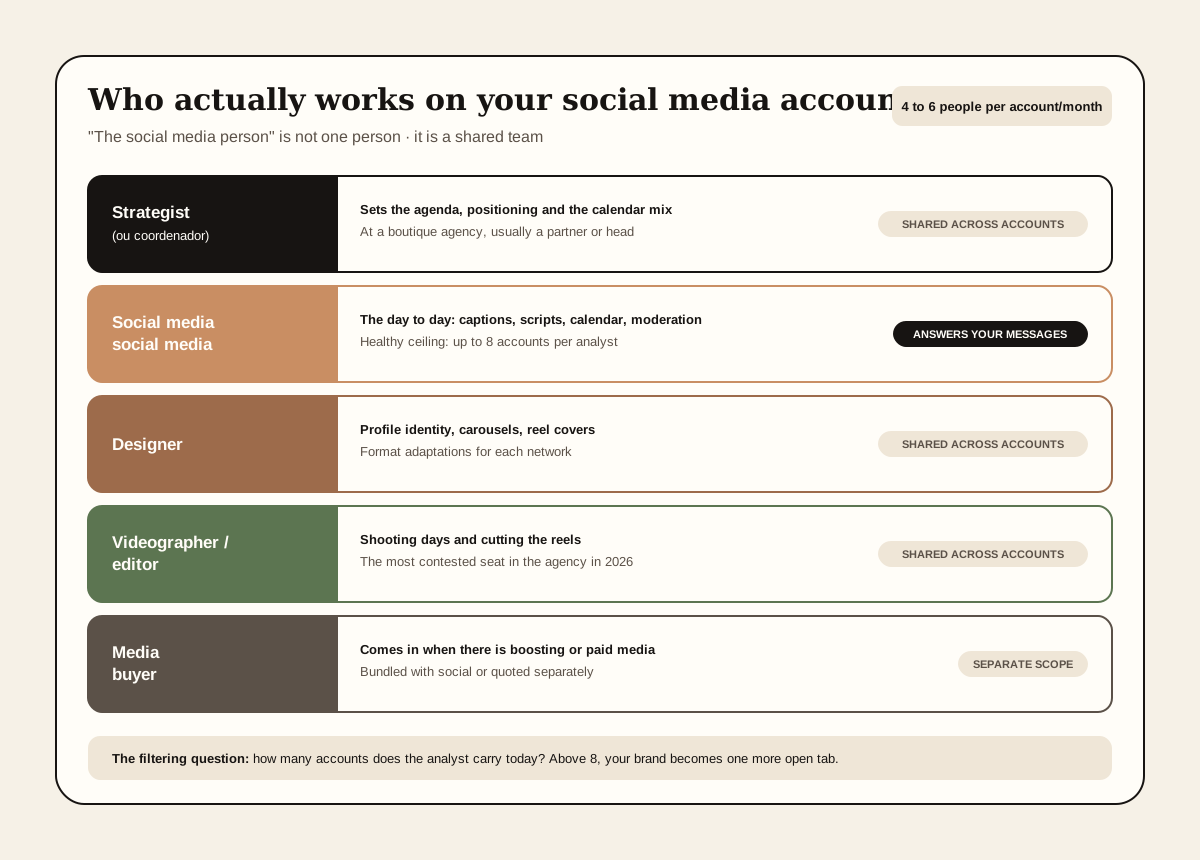
None of these people is 100% dedicated at an SMB fee, and that is fine: sharing the team across accounts is exactly what makes the model cheaper than hiring all five as employees. The problem is when the agency hides the arithmetic. Ask how many accounts the analyst carries today. Above 8, your brand becomes one more open tab.
What the agency delivers by investment tier
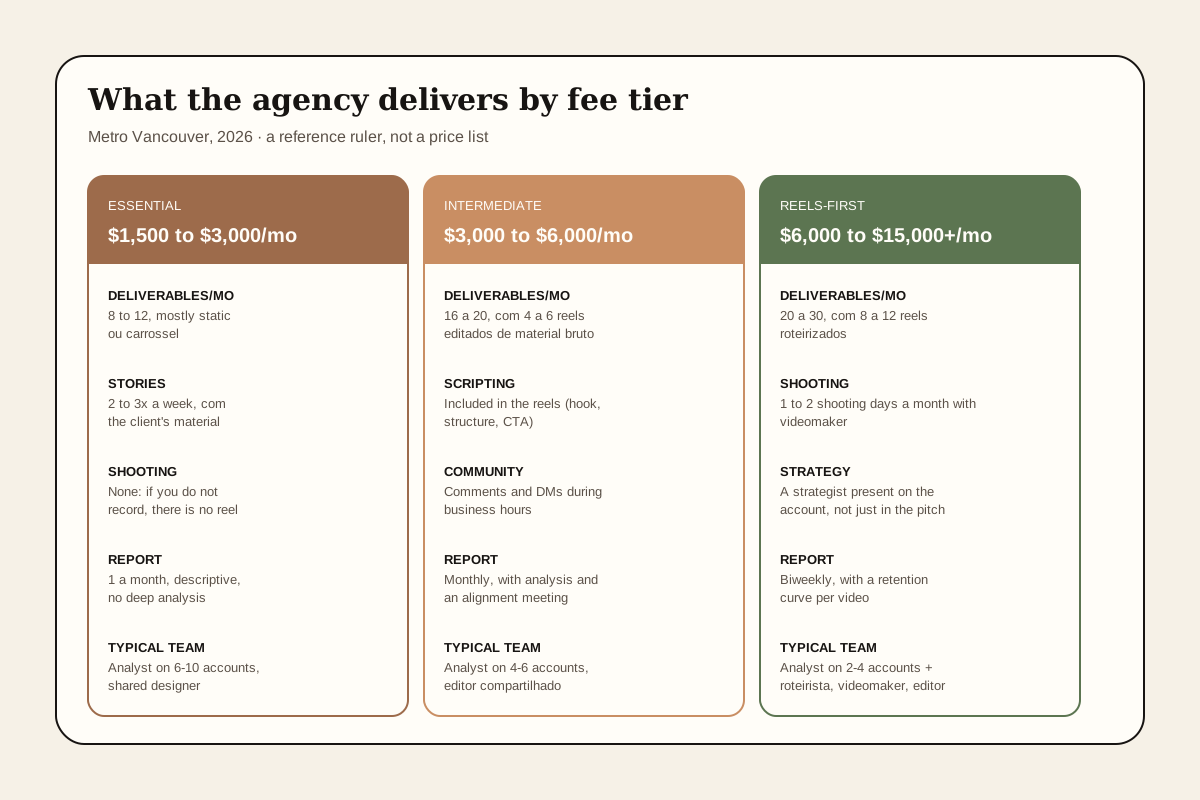
Metro Vancouver ranges for 2026, from our experience operating and quoting against other shops (it varies by city and seniority; treat this as a ruler, not a price list):
Essential · $1,500 to $3,000/month
- 8 to 12 monthly deliverables, mostly static or carousel
- Stories 2 to 3 times a week, from the client's material
- 1 monthly report (descriptive, no deep analysis)
- No shooting: if you do not record, there is no reel
- Typical team: an analyst split across 6 to 10 accounts, a shared designer
Intermediate · $3,000 to $6,000/month
- 16 to 20 monthly deliverables, with 4 to 6 reels edited from the client's raw footage
- Reel scripting included (hook, structure, CTA)
- Community management during business hours (comments and DMs)
- Monthly report with analysis and an alignment meeting
- Typical team: an analyst on 4 to 6 accounts, a shared video editor
Reels-first · $6,000 to $15,000+/month
- 20 to 30 monthly deliverables, with 8 to 12 scripted reels
- 1 to 2 shooting days a month with a videographer (at your site or in a studio)
- A strategist present on the account, not just in the pitch
- Extended community management, biweekly report with a retention curve per video
- Typical team: an analyst on 2 to 4 accounts, a scriptwriter, a videographer and an editor in the flow
Social media is one slice of a full-service agency's pie. The complete fee figures (paid media, website, CRM) are laid out in how much a marketing agency costs in Metro Vancouver.
Reels changed the scope (and the centre of gravity of the work)
Until a few years ago, a social media agency was essentially a design operation: a pretty feed, an aligned palette, a well-made carousel. Meta itself has said reels account for roughly half the time people spend on Instagram, and the official Creator Lab treats short video as the central distribution format. The scope turned with it.
The centre of the work today is scripting and editing. A mediocre carousel costs a few designer hours. A reel that holds retention goes through 8 stages:
- Brief and agenda: what to communicate this month, with the pillar mix from the 30-day reels editorial calendar
- Script: choosing the right structure for the objective, from the 7 script structures that hold retention
- Hook: the first 3 seconds decide the video (30 tested hooks here)
- Shooting: a shoot day with a videographer, or raw footage recorded by the client with direction
- Editing: cuts, pace, burned-in captions, cover
- Approval: one round, at most two (infinite approval kills the schedule)
- Publishing: timing, distribution, the first comments
- 48-hour analysis: read the video's retention curve and feed the next script
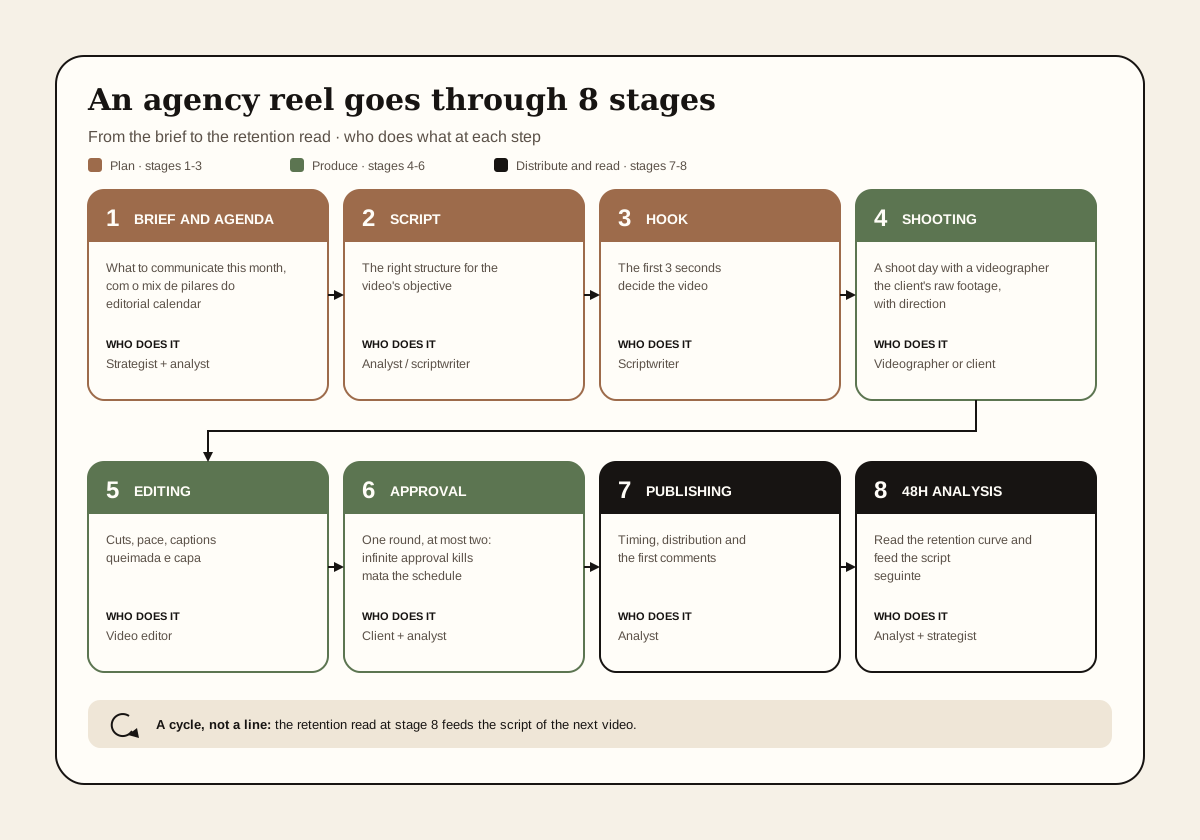
Notice that design appears in support, not as the protagonist. The question that separates a good proposal from a decorative one: who writes the scripts and who edits the videos? If the answer gets vague, the package is from 2019 at 2026 prices.
What AI changed in the process (and what it does not solve)
Internally, AI became infrastructure. Reference research, a first script draft, hook and caption variations, transcription, rough cuts, comment summaries for the report. The bench time per piece dropped considerably, and an agency that has not absorbed that is charging you for its own lag.
But clients arrive with the inevitable question: "if ChatGPT writes captions, why pay an agency?". Captions were never the bottleneck. The bottleneck is what AI does not do:
- Record. Somebody has to press REC, show up, redo the take that went wrong. Consistency of recording is the number one reason accounts stall.
- Have an opinion. Content that retains carries a point of view. AI generates the average of what already exists; the average stops nobody's thumb.
- Know your business. The in-joke of the niche, the customer who complains every month, the product's margin.
- Decide what not to post. Half of strategy is cutting a bad idea before it costs an edit.
An agency that uses AI well delivers more volume with the same team. When it comes in to replace the scriptwriter, what comes out is the generic content your competitor generates for free.
Agency, in-house team or freelancer: when to hire each
The right decision depends less on budget and more on who coordinates. The three routes, with estimated 2026 figures:
| Criterion | Agency | In-house team | Freelancer |
|---|---|---|---|
| Monthly cost | $1,500 to $15,000+ (fee) | $10,000 to $20,000+ (2-3 employees with payroll burden) | $1,000 to $3,000 per specialist |
| Time to start | 2 to 4 weeks | 2 to 4 months (hire and ramp) | Days |
| Control and brand immersion | Medium | Total | High over a narrow scope |
| Team breadth | Multidisciplinary from day 1 | You hire seat by seat | One competency per person |
| Main risk | Dilution across accounts | Fixed cost and dependency on 1-2 people | Coordination becomes your job |
| When it makes sense | You want consistency without managing people | Content is core to the business, high daily volume | Narrow scope with an internal manager |
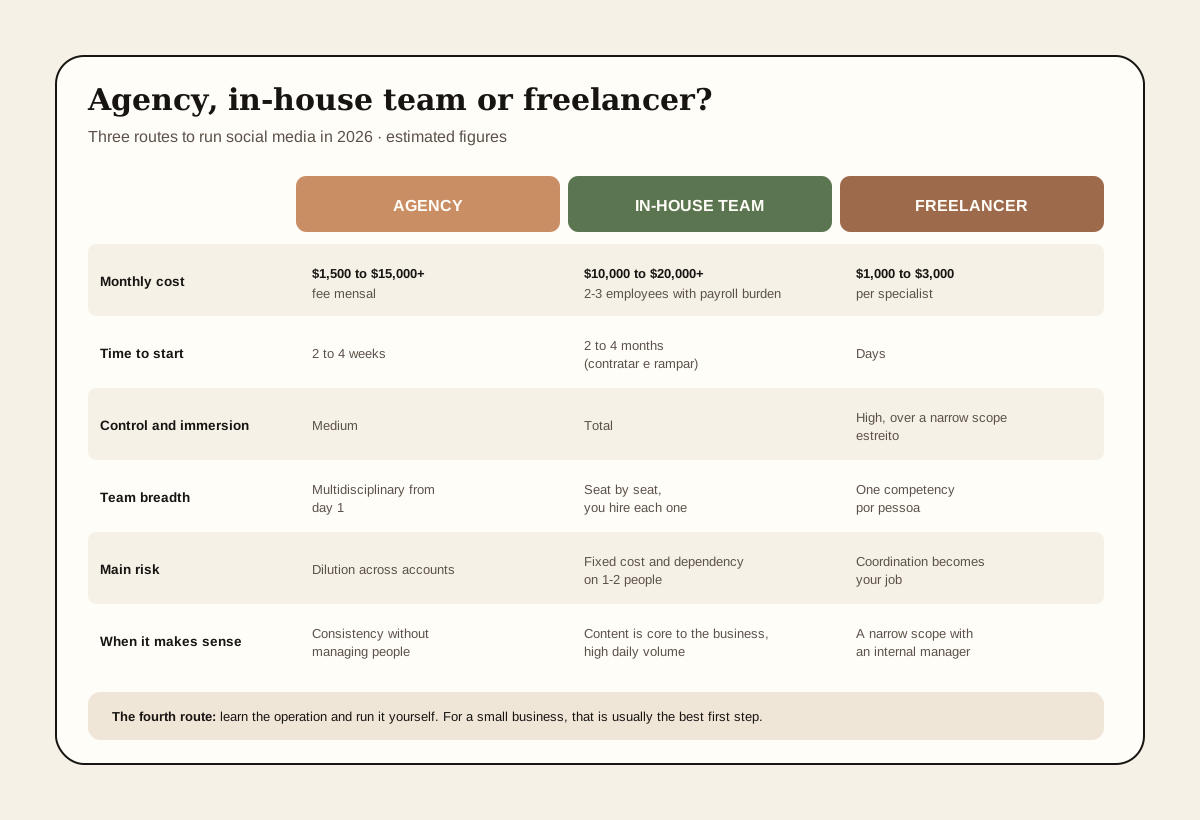
Two notes. An in-house team is only cheaper when the brand publishes at high volume and uses the team all month; for 12 posts a month, payroll is a tractor for weeding a garden. And a freelancer works very well right up until the first vacation, or until they land a bigger client than you; with no redundancy, your presence depends on somebody else's calendar.
And there is a fourth route the market pretends does not exist: learn the operation and run it yourself (or train someone on the team). For a small business, that is usually the best first step.
Red flags of the pretty-post agency
The most common subgenre in the market is the agency that delivers a beautiful feed and no result. The signs show up before the signature:
- A report that opens with followers and likes. A vanity metric on page one is a confession. A serious report opens with retention, non-follower reach and conversation generated.
- An impeccable portfolio and zero questions about your business. If nobody asked about your margin, your ticket and where your customers come from, the plan will be the previous client's template.
- No scriptwriter. A team of designers and a "generalist social media person" produces a 2019 feed. Ask who writes the scripts and ask for two examples.
- The same closed package for everyone. A neighbourhood pizzeria and a B2B clinic getting the same "12 posts + 8 stories" is a production line, not a strategy.
- Nobody mentions retention. An agency that does not analyze the curve of the videos it publishes is flying blindfolded and charging for the trip.
The metrics that matter in a social media report
A like is the cheapest metric on Instagram: it costs a distracted tap and says nothing about whether the video was watched, saved or generated conversation. A report worth reading organizes metrics in layers, from vanity to cash:
- Vanity: likes, followers. Context, not a conclusion.
- Consumption: average retention, watch time, non-follower reach. Reading the curve pattern by pattern is covered in the retention graph explains why your Reel popped off (or flopped).
- Intent: saves, shares, DMs started.
- Business: leads, bookings, sales with a tracked source. The layer that justifies the fee.
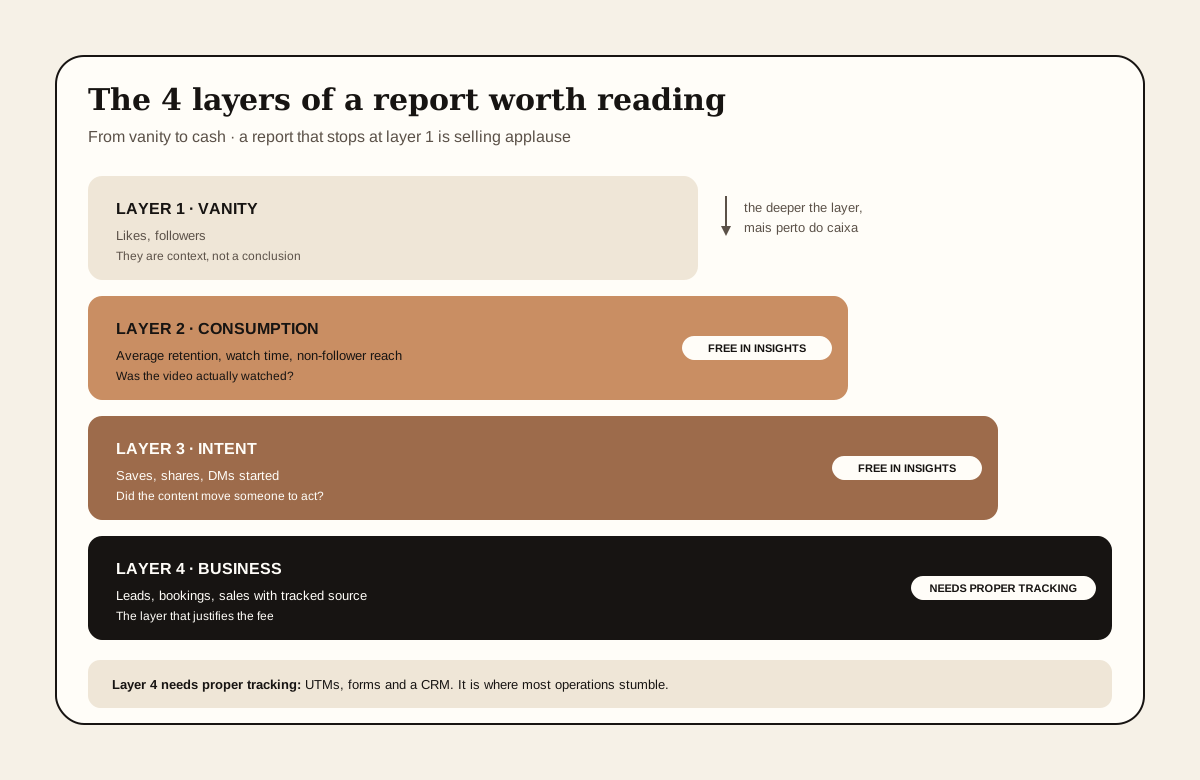
If the report stops at layer 1, they are selling you applause. Layers 2 and 3 Instagram gives you free in insights; layer 4 requires proper tracking (UTMs, forms, CRM), and it is where most operations stumble.
How Koko works
Social media at Koko is a reels-first operation with a technical leg: scripting and shooting at the centre, AI accelerating the bench, and layer 4 of the report switched on, with tracking through to the lead. A named team in the proposal, an analyst with a declared account ceiling, and a retention curve analyzed video by video.
If you are quoting agencies (us or anyone else), take the three questions from this article into the meeting. You can talk to us.
FAQ
What does a social media agency do? It plans the content strategy, writes scripts and captions, produces and edits the pieces (with growing weight on reels), publishes, moderates comments and DMs, and reports results. In a serious operation, 4 to 6 professionals work on the account: strategist, analyst, designer, videographer/editor and, with paid media, a media buyer.
What does a social media agency cost in 2026? In Metro Vancouver, the essential scope (8 to 12 deliverables, no video shooting) runs $1,500 to $3,000 a month. The intermediate, with 4 to 6 edited reels, $3,000 to $6,000. A reels-first operation with shooting days and a strategist starts at $6,000 and passes $15,000. It varies by city and seniority.
What is the difference between a social media agency and a digital marketing agency? The social media one specializes in content and community on the networks. The digital marketing one also covers paid media, SEO, website, CRM and automation. Full-service includes social media as a slice of the fee; the specialist goes deeper into scripting, production and retention analysis.
Does the agency shoot the videos or do I need to record? It depends on the tier. Essential and intermediate scopes edit raw footage the client records with direction. Reels-first includes 1 to 2 monthly shooting days with a videographer. In every case, someone from the brand has to appear: outsourcing the face of the business is the part that does not work.
Is an agency or in-house social media better? An agency delivers a multidisciplinary team from month one and is cheaper at SMB volumes. An in-house team ($10,000 to $20,000 monthly with payroll burden, for 2-3 people) pays off when content is core to the business and there is daily production. The classic mistake is hiring one person and expecting them to script, shoot, edit and analyze alone.
How do I know if the agency is good before signing? Three questions filter almost everything: who writes the scripts (ask for examples), how many accounts the analyst carries today (above 8, diluted attention) and what opens the monthly report (likes and followers is a shop window). A good agency answers all three without gymnastics.
Conclusion
Hiring a social media agency in 2026 means hiring a video operation with strategy attached, and the market still sells (and buys) it as if it were a subscription to pretty posts. The distance between those two things is the distance between a fee that becomes an investment and a fee that becomes a bill.
My position: before comparing price, compare process. Ask for a real reel script, a real client report, and the name of whoever will run your account. A proposal that survives those three questions usually survives the sixth month of the contract, which is where promises die.
Read next
- The 7 reels script structures that hold retention in 2026 · the frameworks a good agency uses (and you can ask for)
- 30 reels hooks that grab in the first 3 seconds · the hook decides the video before the content appears
- Reels editorial calendar: 30 days planned · the pillar mix separating consistency from audience burnout
- How much a marketing agency costs in Metro Vancouver · the full-service fee ranges social media fits into
Sources and references
This is the picture of what we see (and run) in social media in 2026. If you want to quote with Koko, audit a proposal you received, or work out which route fits your moment, talk to us.