A video script is the document that defines, before any recording, what will be said and what will be shown in every second of the video, from the hook to the CTA. Without it, what you have is improvisation with the camera on. Sometimes it works. On average it produces the video the company posts, the team likes out of solidarity, and the algorithm buries in 48 hours.
The context no longer forgives improvisation. Video takes an enormous share of screen time, and everyone is competing for that feed, from national brands to the competitor down the street. The difference between the video that holds an audience and the one that dies at second 3 is usually decided before the record button: in the text.
Most material on scripting teaches either cinema (master scenes, plot points, character arcs) or scattered reels tips. This article covers the middle, which is where marketing lives: scripting for any commercial video, from the 30-second reel to the brand film, from long-form YouTube to the ad.
How to write a video script, in one sentence
To write a video script, answer three questions before writing (who the video is for, what it competes with for attention, what the next action is) and fill five blocks in this order: hook, promise, development, payoff and CTA, always in two columns, what you hear and what you see.
That is the whole method. The rest of this article is the expanded version, with two complete scripts to copy and adapt.
The 3 questions before any line
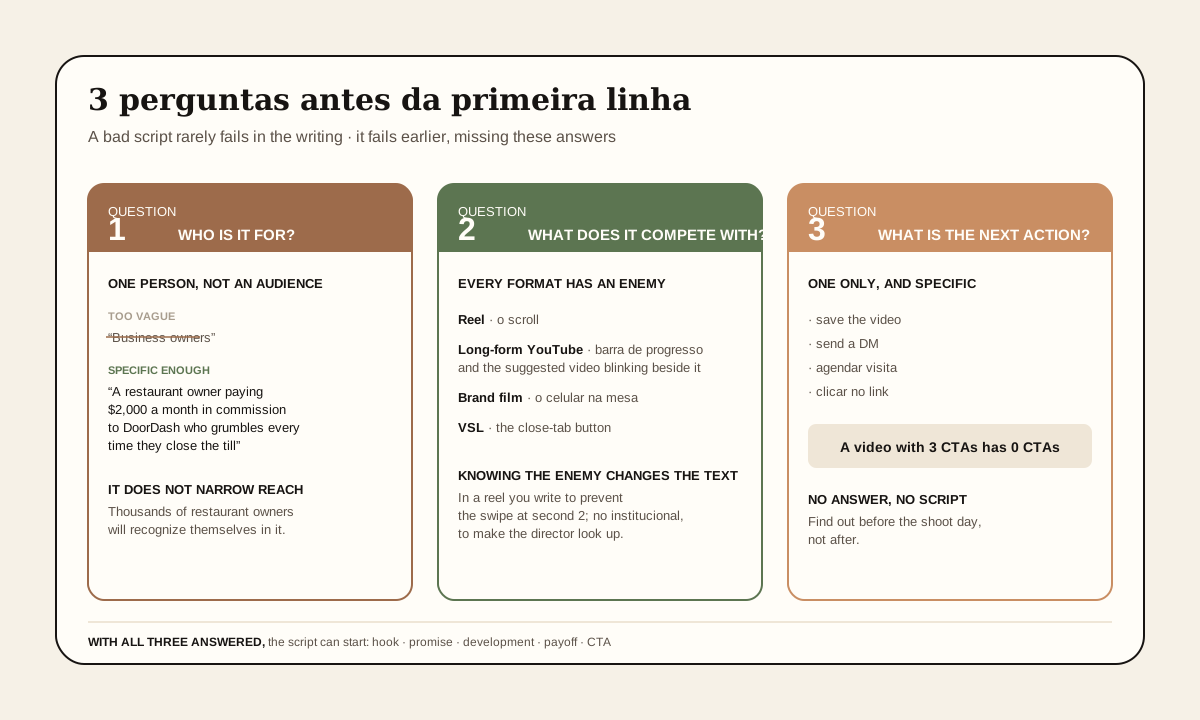
A bad script rarely fails in the writing. It fails earlier, missing the answers to three questions nobody bothered to ask.
1. Who is this video for? One person, not an audience. "Business owners" is not an answer. "A restaurant owner paying $2,000 a month in commission to DoorDash who grumbles every time they close the till" is. And no, specificity does not narrow reach: thousands of restaurant owners will recognize themselves in that sentence.
2. What does it compete with? Every format has a different enemy. A reel competes with the scroll. In long-form YouTube, the enemy is the progress bar and that suggested video blinking beside it. A brand film in a sales meeting competes with the phone on the table, and a VSL fights the close-tab button. Knowing the enemy changes the text: in a reel you write to prevent the swipe at second 2, in a brand film you write to make the director look up from the screen.
3. What is the next action? One only. Save the video, send a DM, book a visit, click the link. A video with three CTAs has zero CTAs. If you do not know what you want the person to do after watching, the script is not ready to be written (better to find that out before the shoot day, not after).
The universal 5-block structure
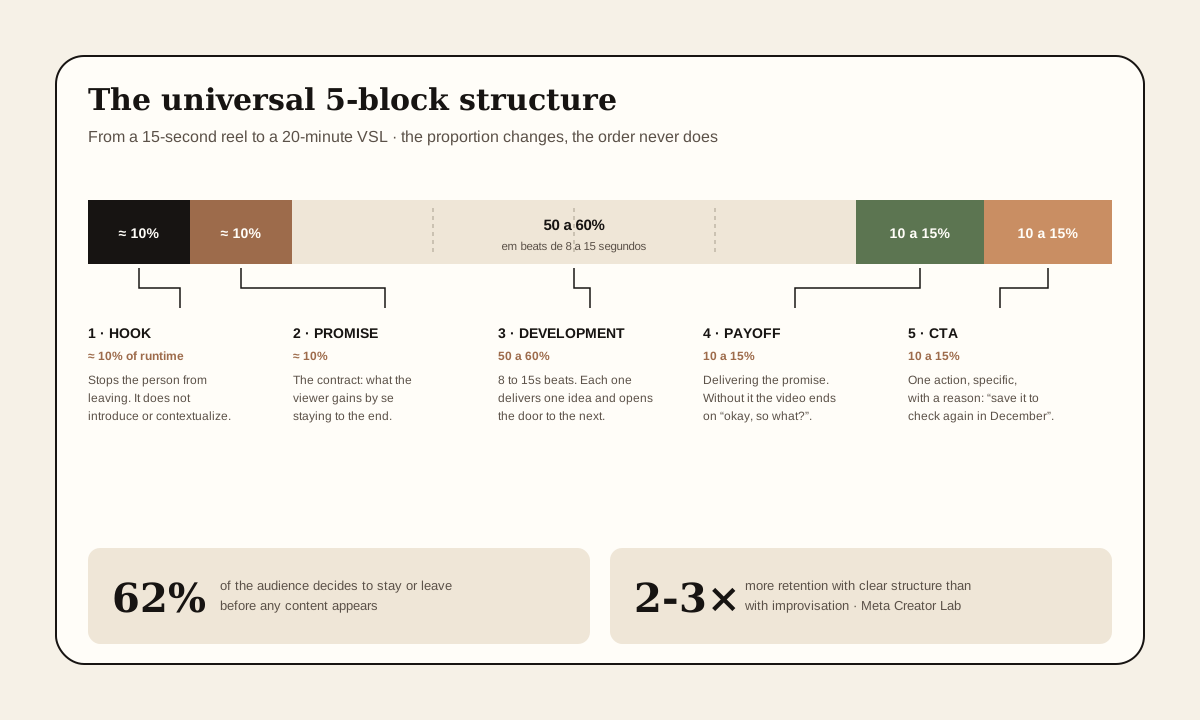
Every commercial video that works, from 15 seconds to 15 minutes, goes through the same five blocks. What changes between formats is the proportion, never the order.
-
Hook (about 10% of the runtime). The first sentence or image, with a single job: stop the person from leaving. It does not introduce, does not contextualize. In short formats it is survival: 62% of the audience decides whether to stay or leave before any content appears, a figure we unpacked in reels hooks and openers.
-
Promise (about 10%). The contract with the viewer: what they gain by staying to the end. "In 30 seconds you will know whether you crossed the registration threshold." It is what convinces the person who stopped at the hook, but still has a thumb on the scroll, to stay.
-
Development (50 to 60%). The content itself, broken into 8 to 15 second beats. Each beat delivers one idea and opens the door to the next. A beat that does not pull the next one is where the retention curve collapses in the middle.
-
Payoff (10 to 15%). Delivering the promise, the conclusion that ties the beats together. A video with no payoff ends on "okay, so what?". On the retention graph that shows up as a sharp drop at the end, a pattern explained in how to read the reels retention graph.
-
CTA (10 to 15%). The next action, one and specific, ideally with a reason ("save it to check again in December").
Meta makes this point in the Creator Lab: a video with a clear hook, development and close structure retains 2 to 3 times more than an improvised one. And the 7 classic script structures (PASTOR, AIDA, infinite loop and company) are variations on these 5 blocks with different emphases; the full catalogue with written copy is in the 7 reels script structures.
Format, length and goal: the quick ruler
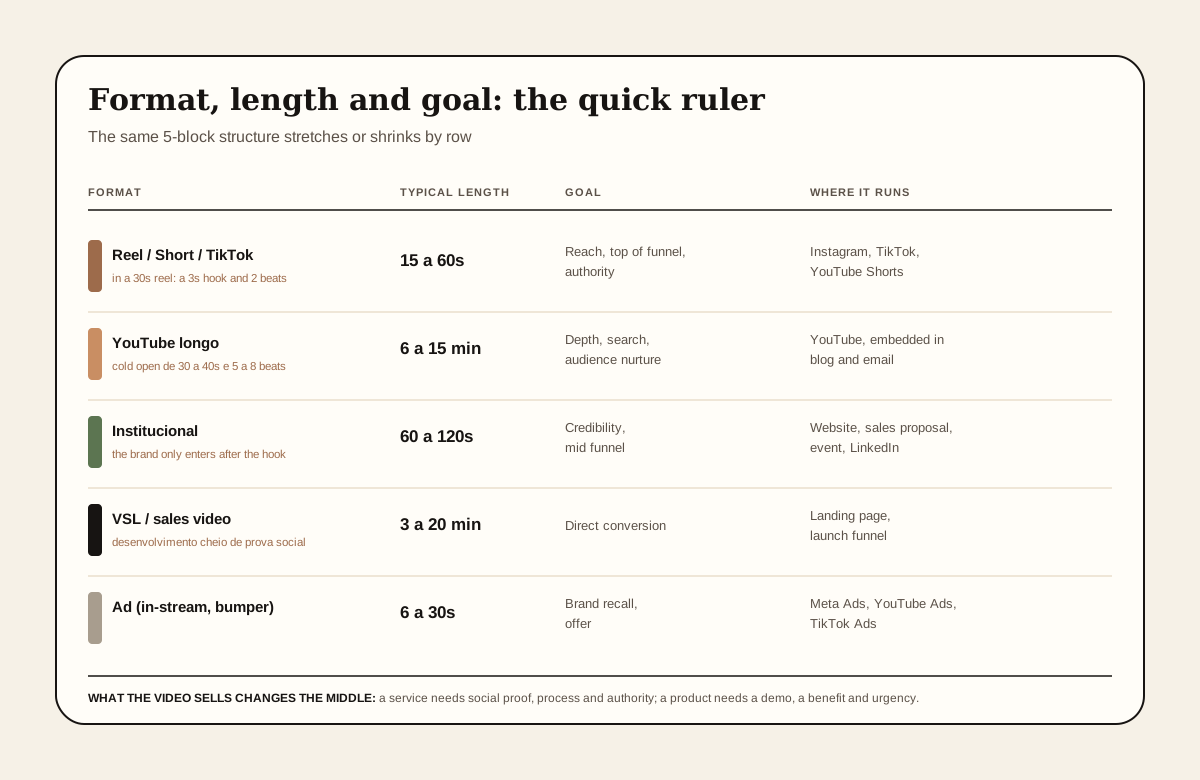
Before writing, worth pinning down which box the video lives in. The table below is the ruler we use in client briefings.
| Format | Typical length | Goal | Where it runs |
|---|---|---|---|
| Reel / Short / TikTok | 15 to 60s | Reach, top of funnel, authority | Instagram, TikTok, YouTube Shorts |
| Long-form YouTube | 6 to 15 min | Depth, search, audience nurture | YouTube, embedded in blog and email |
| Brand film | 60 to 120s | Credibility, mid funnel | Website, sales proposal, event, LinkedIn |
| VSL / sales video | 3 to 20 min | Direct conversion | Landing page, launch funnel |
| Ad (in-stream, bumper) | 6 to 30s | Brand recall, offer | Meta Ads, YouTube Ads, TikTok Ads |
The 5-block structure stretches and shrinks by row. In a 30-second reel, the hook gets 3 seconds and the development fits in 2 beats. In a 12-minute YouTube video, the hook becomes a 30 to 40 second cold open (usually the best passage of the video itself) and the development holds 5 to 8 beats with room to breathe. In a VSL, the development swells with social proof, because the job there is beating objection after objection until the pitch.
And there is a variable length does not capture: what the video sells. A service needs social proof, process and the operator's authority; a product needs a demo, a benefit and urgency. That difference changes the middle of the development, and there is a whole article on it: reels scripts for services vs products.
Two columns: what you hear, what you see
A professional commercial script is written in two columns. On the left, the audio: voiceover, dialogue, music. On the right, the image: framing, cuts, on-screen text, b-roll. The image column is the most neglected one in marketing, and it is what separates a video from a filmed podcast. Both examples below are in that format, ready to copy.
Example 1: a complete reel script (30 seconds)
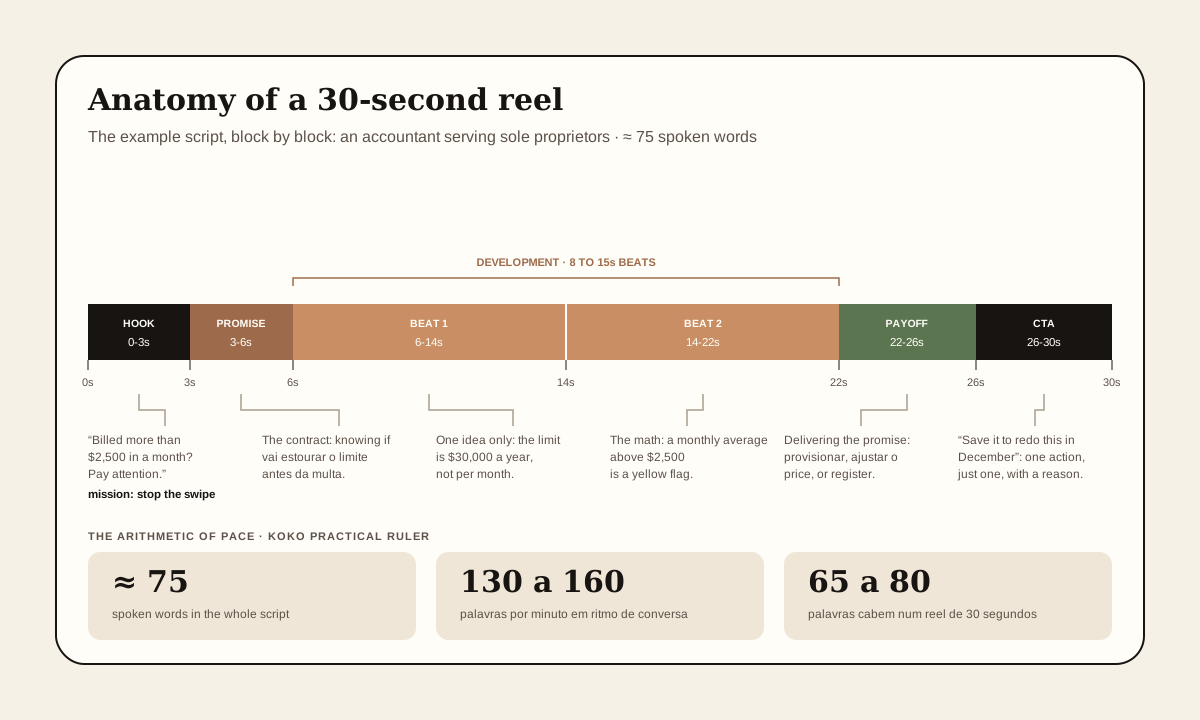
Scenario: an accountant serving sole proprietors, top-of-funnel educational video. Expected action: save the video.
| Time | Block | Audio (what you hear) | Image (what you see) |
|---|---|---|---|
| 0-3s | Hook | "If you're a sole proprietor and you billed more than $2,500 in one month, pay attention for the next 30 seconds." | Accountant in close-up, looking at camera. On-screen text: "$2,500/month" |
| 3-6s | Promise | "I'll show you how to know whether you'll cross the year's threshold and what to do before the CRA notices." | Hard cut. She pulls a calculator in front of the camera |
| 6-14s | Development · beat 1 | "The small supplier threshold is $30,000 a year, not per month. One strong month on its own does not force you to register." | On-screen text: "$30,000/YEAR". Quick b-roll of a spreadsheet |
| 14-22s | Development · beat 2 | "Do the math with me: add everything you billed this year and divide by the months that have passed. Average above $2,500, yellow flag." | She types on the calculator; the result pops on screen |
| 22-26s | Payoff | "If the average crossed, there's still time: set aside the tax, adjust your pricing, or register for GST/HST without the scramble." | Three cards appear on screen, one per option |
| 26-30s | CTA | "Save this video to redo the math in December. Worth more than a sticky note on the fridge." | She points at the save button corner. Text: "SAVE 📌" |
Notice the arithmetic: the whole script runs about 75 spoken words, and not by accident. Narration at a natural conversational pace runs between 130 and 160 words per minute (a practical Koko ruler, calibrated in client editing). A 30-second reel holds 65 to 80 words. A 120-word script for 30 seconds only fits if you talk like an auctioneer.
Example 2: a complete brand film script (90 seconds)
Scenario: a custom cabinetry shop, video for the website and the sales proposal. Expected action: book a showroom visit.
| Time | Block | Audio (what you hear) | Image (what you see) |
|---|---|---|---|
| 0-8s | Hook | Saw noise, no narration until second 4. Narration: "Everyone knows a story about custom cabinets that ran three months late and arrived with the wrong door." | Close-up on a carpenter's hands running a ruler across a board. No logo on screen |
| 8-15s | Promise | "In the next 60 seconds we'll show you what makes a design leave the screen and reach your wall exactly the same." | Aerial shot of the workshop floor. Discreet lettering with the brand name |
| 15-35s | Development · process | "Here, no board is cut before the 3D design is approved by you. Measurement is digital, cutting is CNC, and every piece leaves the shop numbered." | Sequence: laser measuring in the client's home, 3D design rotating on screen, CNC machine cutting, a label going onto a piece |
| 35-55s | Development · people | Carpenter testimonial, no narration: "I've been here 15 years. Anything that comes out wrong comes back to my bench. So it doesn't come out wrong." | Carpenter facing camera at his bench. Name and role in lettering |
| 55-65s | Development · proof | "More than 3,000 kitchens delivered, from Surrey to the North Shore." | A real client opening the cabinets of an installed kitchen, unposed |
| 65-80s | Payoff | "In the end, what we deliver doesn't fit in the truck: it's the certainty that the design approved on screen is the one installed on the wall." | Split screen: 3D design on one side, finished kitchen on the other, same angle |
| 80-90s | CTA | "Book a showroom visit. The 3D design is on us." | Showroom exterior, address, phone and logo full screen |
A detail that goes unnoticed: the company is only named after second 8, and its story (the carpenter's 15 years, the 3,000 kitchens) only comes in once it has earned the right to be told. A brand film opening with "founded in 1998, our mission is..." loses the meeting to the phone on the table before second 10.
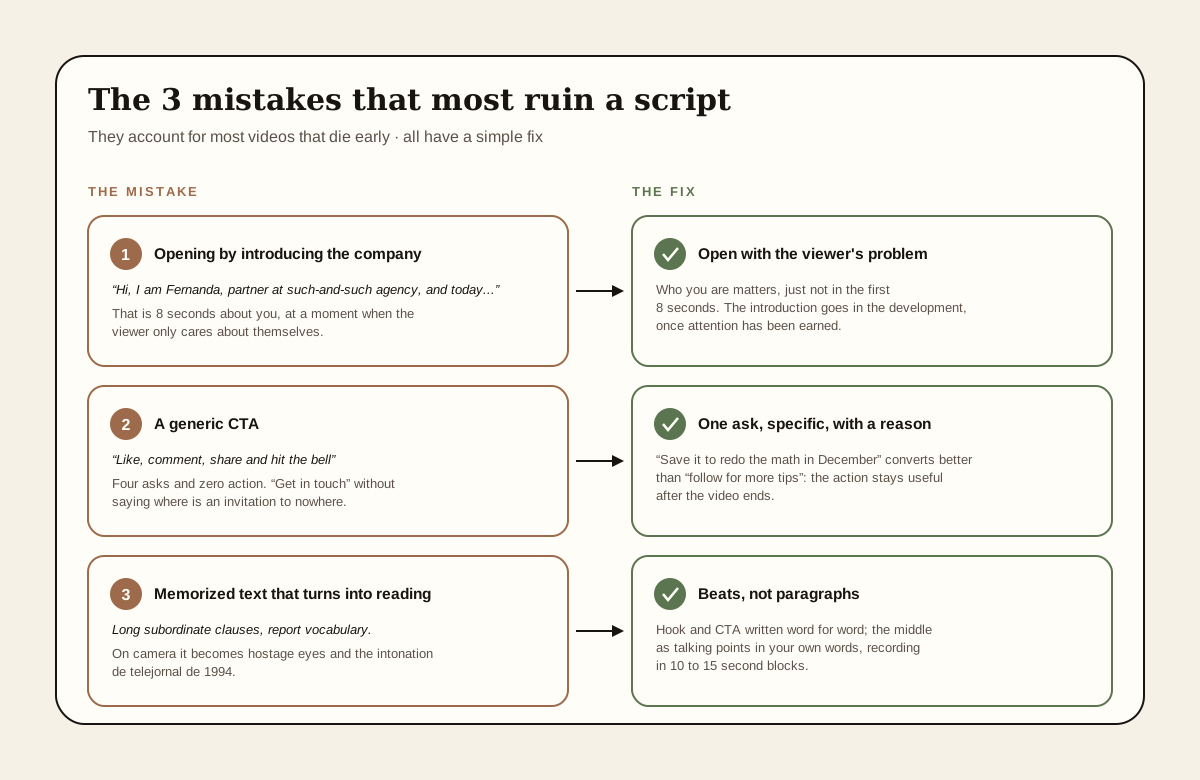
The 3 mistakes that most ruin a script
Three patterns account for most videos that die early. All have a simple fix.
Mistake 1: starting by introducing the company. "Hi, I'm Fernanda, partner at such-and-such agency, and today I'm here to talk about..." That is 8 seconds about you at a moment when the viewer only cares about themselves. Fix: open with the viewer's problem and leave the introduction for the development, once attention has been earned (who you are matters, just not in the first 8 seconds).
Mistake 2: a generic CTA. "Like, comment, share and hit the bell" is four asks and zero action. "Get in touch" without saying where is an invitation to nowhere. Fix: one ask, specific, with a reason. "Save it to redo the math in December" converts better than "follow for more tips" because the action stays useful after the video ends.
Mistake 3: a memorized script that turns into reading. Text written to be read has long subordinate clauses and report vocabulary. In front of a camera that produces hostage eyes and the intonation of a 1994 newscast. Fix: write beats, not paragraphs. The first sentence of each block gets written word for word (the hook and CTA deserve that care); the middle stays as talking points in your own words, recording in 10 to 15 second blocks instead of hunting the perfect monologue.
How Koko works on this
The script is a standard deliverable in Koko's social media contracts: every client video, from the reel to the brand film, starts as a two-column document before any shoot day. It is the cheapest part of production and the part that moves the result most.
If the challenge is bigger than a template (calendar, production, distribution, measurement), you can talk to us.
FAQ
What is a video script? It is the document that organizes, before recording, what will be said and what will be shown in each part of the video. The professional format uses two columns (audio and image) and divides the video into blocks: hook, promise, development, payoff and CTA.
How do I write a video script step by step? First answer three questions: who the video is for, what it competes with for attention, and what the next action is. Then fill the 5 blocks in order (hook, promise, development, payoff, CTA), writing audio and image side by side. Finally, read it out loud and cut until it fits the target length.
How many words does a video script hold per minute? Narration at a natural conversational pace runs between 130 and 160 words per minute. A 30-second reel holds 65 to 80 spoken words; a 90-second brand film, between 180 and 220, discounting the pauses for image.
What is the difference between a script and a storyboard? The script is text: it describes audio and image in columns, block by block. The storyboard is drawing: it turns the image column into illustrated frames, shot by shot. In lean social media production, the two-column script usually makes the storyboard unnecessary; in production with an expensive shoot day, the storyboard prevents rework.
Do I need to memorize the script to record? No, and it is better not to. Memorize only the first sentence of each block (hook and CTA word for word) and speak the rest over talking points, recording in 10 to 15 second blocks. Fully memorized text turns into reading, and reading kills the naturalness that holds retention.
Does the same structure work for ads? Yes, compressed. In a 6-second bumper the hook and CTA are practically the whole video. In a 30-second in-stream you get a hook, one development beat and a CTA. The order stays; the development is what gets sacrificed.
Conclusion
The script is the cheapest stage of video production and the one that most determines the result. It costs an hour of work and a one-page document. Even so it is the first thing cut when the schedule tightens, while the debate about which camera to buy eats weeks. A good camera filming a bad script delivers a bad video in 4K.
If you take one thing from here, take the order: three questions, five blocks, two columns. Talent and editing help, but neither one fixes a video that did not know who it was talking to or what it wanted to happen next.
Read next
- The 7 reels script structures that hold retention · PASTOR, AIDA, infinite loop and 4 more, with full copy
- 30 reels hooks that grab in the first 3 seconds · tested openers to steal for block 1 of your script
- Reels scripts for services vs products · what changes in the development when the video sells trust
- The retention graph explains why your Reel popped off · the curve that shows which block your script failed in
Sources and references
- Think with Google · video consumption data
- Meta · Instagram Creators / Creator Lab
- Hootsuite · social media reports
- Canada Revenue Agency · GST/HST small supplier rules
This is the scripting method Koko uses on client accounts, from the reel to the brand film. If you want someone to write, shoot and measure it with you, talk to us.